
Showing posts with label christmas. Show all posts
Showing posts with label christmas. Show all posts
Wednesday, September 2, 2020
The PA Melting Pot: THE PA MELTING POT: 7-2 B SPECIAL COLUMN - ODE TO...
The PA Melting Pot: 7-2 B SPECIAL COLUMN - ODE TO...: Special Column: Ode to the Slovak Folk Crafts Shoppe

Friday, December 2, 2016
THE PA MELTING POT: A SPECIAL CHRISTMAS HOLIDAY COLUMN - PART 2 - Italy
THE PA MELTING POT: A SPECIAL CHRISTMAS HOLIDAY COLUMN
LINKS AT VERY BOTTOM OF THE PAGE
THE MELTING POT: A SPECIAL CHRISTMAS HOLIDAY COLUMN
Immigrants to
western PA brought their Christmas customs with them and as they
assimilated they
have added additional customs.
ITALY


ITALY
Italian Christmas
customs and traditions
GOOGLE SEARCH ON
ITALIAN CHRISTMAS
Chef’s Italian
Christmas
Recipes from
Academia Barilla
Christmas recipes
from AcademiaBarilla
Seven Fishes
Recipes from Epicurious
ITALALIAN TARALLI
VIDEO
ITALIAN FOCCACCIA
VIDEO
ITALIAN CHRISTMAS
SLIDE SHOW
Thursday, December 1, 2016
THE PA MELTING POT: A SPECIAL CHRISTMAS HOLIDAY COLUMN - PART 1 - GERMANY
LINKS AT VERY BOTTOM OF THE PAGE
THE MELTING POT: A SPECIAL CHRISTMAS HOLIDAY COLUMN
THE PA MELTING POT: A SPECIAL CHRISTMAS HOLIDAY COLUMN
LINKS AT VERY BOTTOM OF THE PAGE
THE MELTING POT: A SPECIAL CHRISTMAS HOLIDAY COLUMN
Immigrants to
western PA brought their Christmas customs with them and as they assimilated they
have added additional customs.
GERMANY


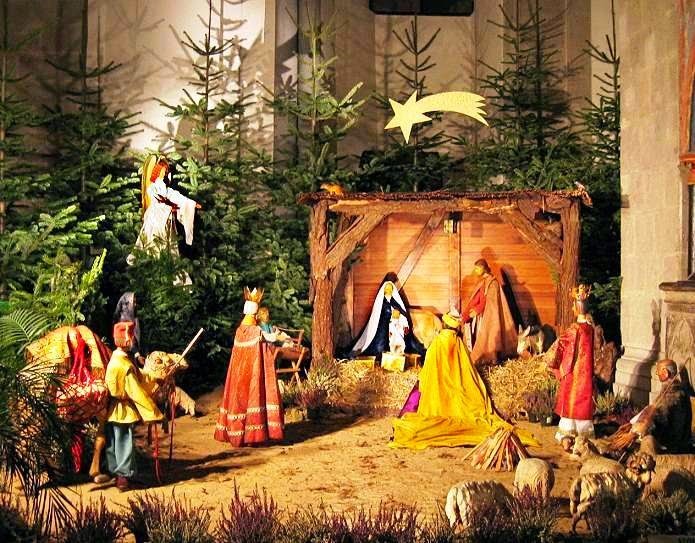


Germany is well known for its Christmas (Weihnachten) markets where foods and decorations are sold. Famous and popular German decorations are glass ornaments, Advent calendars, wreaths and Christmas trees. The Christmas tree was brought into the house on Christmas Eve, and during that evening the family would read the Bible and sing Christmas songs. Traditional meals include Ganz (goose), Karpfen (carp) and cheese fondue. On Christmas Eve the meal could include Wurstchen (sausages) with potato salad, casseroles, and soups. Beverages could be Weihnachtspunsch (Christmas Punch), Eiergrog (egg grog), Gluhwein (mulled wine), Gluhmost (hot apple cider), Rumgrog (hot rum) and Weibnachstsbier (beer)
-----------------------------------------
GERMANY
German
Christmas customs and
traditions
GOOGLE
SEARCH ON GERMAN CHRISTMAS
Eiergrog
Egg grog
Gluhwein
Mulled wine
Gluhmost
Hot apple cider
Rumgrog
Rum
grog
Monday, December 22, 2014
THE PA MELTING POT: 7-2 B SPECIAL COLUMN - ODE TO SLOVAK FOLK CRAFTS IN SW PA.
The
Melting Pot: A look at the evolution of food in
southwestern Pa.:
Special Column: Ode to the Slovak Folk Crafts Shoppe in Grove
City, PA
I received a
letter in December of 2014 because I had been a previous customer of this establishment
where I had purchased an ethnic cook book and a CD-ROM of the LARGE animated
woodcarving (which filled a room – 17 feet across) from Slovakia. The Shoppe opened in 2000 and closed in 2014 “to help the
people of Slovakia (Czechoslovakia and Slovakia) in the difficult transition
from a communist to a free-market economy”.
The Shoppe
had offered handcrafts made by artisans in over 30 other countries including
the US. Customers from all 50 states,
most of the Canadian provinces and 23 other countries have purchased over
32,000 decorated eggs.
The Slovaks settled in three western PA counties (Allegheny, Fayette and Westmoreland) to build better lives & to escape oppression under Austro-Hungarian rule. They became miners (in 1891 18,000 Slovak miners went on strike in Connellsville protesting exploitation and a cut in wages) and steel workers. In Pittsburgh the Slovak-Americans were the 5th largest group after the Germans, Italians, Irishmen, and Poles. Hazelwood, North Braddock, West Mifflin, and Duquesne had 24% – 54% residents with Slovak ancestry in 1990. According to the 2000 U.S. census (nationalities not addressed in 2010 census) there were 797,764 people of Slovak heritage living in the United States. Pennsylvania ranks first of the 50 states with 30.5% of these residents. Pittsburgh has 105,525, making it the #1 city in the world for people of Slovak heritage outside of Slovakia itself.
They arrived
during the Industrial Revolution and by 1907 almost 57 % of Pittsburgh steel
workers were Slovaks who settled in Homestead and Munhall. With wages so low for unskilled workers they
chose poor housing and took in boarders to afford food. Most of the foods served were meats and
breads since the women didn’t have time to prepare expensive vegetables while
taking care of their families, their homes and boarders. They spent 46 % of
their income on food! Most of their
activities were centered around weddings, the church, holidays and their
families. Food was a crucial part of Slovak life and key in this environment.
As they
assimilated into their new country they got reputations as hard workers,
reliable, patriotic and honest. The
Slovaks keep tradition alive and participate in the Pittsburgh Folk Festival
every year in May. There are three Slovakian
societies in Pittsburgh also.
Common foods
were and are: Staromodny Zemiakova
Polievka (old fashioned potato soup), Sladky Dezert Polievka (sweet dessert
soup), Pulnina (veal loaf), Viancne Bean Jedlo (Christmas bean dish), Matice
Vojne (nut rolls), Cirek (Easter cheese), Nove Matky Jacmen Polievka (new
mother’s barley soup), Vianocne Kysla Hubova Polievka (Christmas sour mushroom
soup), Ciberja (potato soup), Rasca Polievka (caraway seed soup), Bundurcov
Halusky (potato dumplings), Kolbassa (pork sausage), Pirohy (pastries filled
with cottage cheese, sauerkraut or potatoes), Halubky (stuffed cabbage),
Goulash (stew), Kapusta Ochutenie, (sauerkraut relish), Brusnica Maline Kyslou
Smotanu Forma (cranberry/raspberry/sour cream mold), Palancinky (crepes),
Cheregie (deep fried pastries), Bublana (cherry or blueberry squares) and
Kolachky (prune filled cookies).
For
recipes from 1700s to 1960s and modern day links versions, visit
www.ThePAMeltingPot.com
. Christine Willard, a native of
western Pennsylvania, researches and blogs about the food unique to western
Pennsylvania. She currently resides in North Carolina. Her blog can be found at
www.ThePAMeltingPot.com.
LINKS FOR MORE INFORMATION AND RECIPES BELOW PHOTOS!!


LINK FROM GLOBALPITTSBURGH.ORG
Slovakian
The first wave of Slovak immigrants came to the Pittsburgh region in the 1890s. It is estimated that close to 100,000 came to this area looking for work and a chance for a better life. The National Slovak Society, the first fraternal benefit organization in America, was found in Pittsburgh in 1890, to help these new citizens financially and socially. Churches and schools were built in each neighborhood were Slovaks lived. It is estimated that by 1920, there were 28 Catholic Slovak churches many with adjoining schools and social halls. The Slovak Lutherans also founded their own churches and organizations. The Byzantine or Greek Catholics from Slovakia also established their own places of worship.
Even though the neighborhood churches are gone, the young American Slovaks look to the Slovak fraternal societies and the cultural organizations to keep their heritage alive. The University of Pittsburgh has a permanently endowed Slovak Program within the Department of Slavic Languages and Literature. This was established and funded by the Slovak Fraternal organization.
According to the 2000 U.S. census, there are 797,764 people of Slovak heritage living in the United States. Pennsylvania ranks first of the 50 states with 243,009 (30.5%) of these residents. Metropolitan Pittsburgh has 105,525, making it the #1 city in the world for people of Slovak heritage outside of Slovakia itself.
- Western Pennsylvania Slovak Cultural Association: (http://wpsca.org/)
One of the goals of WPSCA is to acquaint the general public with the geography, history and culture of the Slovak Republic.
- National Slovak Society of the USA: (http://www.nsslife.org/)
Its mission is to unite persons of Slovak and Slavic ancestry and their non-Slav friends and relatives in a fraternal benefit society.
351 Valley Brook Road
McMurray, PA 15317-3337
SLOVAKIAN ODE TO SLOVAK CRAFTS SPECIAL COLUMN LINKS
LINK FROM EVERY CULTURE ON SLOVAKIA
TRADITIONS
CHRISTMAS IN SLOVAKIA
RECIPES 1
RECIPES 2
RECIPES 3
RECIPES 4
Subscribe to:
Posts (Atom)