Thursday, February 19, 2015

THE PA MELTING POT: Southern Europeans: 9-5 Italy: Umbria

The Melting Pot: Southern Europe Umbria

The 1870 United States Census shows there were 784 Italian-born Americans in the US.   Today, over 17 million Americans claim Italian ancestry in the USA and the Italian Americans in the 10 southwestern counties of Pennsylvania claim their heritage:  26.1% (1st - Lawrence) and 10.8% (10th- Armstrong).  

Again, as immigration officials would often combine all regions of a country by the language spoken or the point of origin there are no real numbers of exactly from which regions the Italians came although it seems that most came from central and southern Italy.

In Pittsburgh laborers frequently worked for the city’s public works services and the Equitable Gas Company and the Pennsylvania Railroad yards. Pittsburgh’s Italian neighborhoods included Oakland, East Liberty, the Lower Hill, the Bluff, and Bloomfield.

Umbrian cuisine is very rustic, often called “cucina povera”, or peasant cooking, which uses minimal ingredients and employs methods of preparation that rely heavily on local products:  prosciutto, grains (faro), lentils, vegetables (asparagus), fresh herbs, olive oil (Umbria’s liquid gold), black and white truffles and chocolate. The simple traditional Umbrian dishes have been handed down through generations since the Etruscan times (700 BC).

Antipasti:  Bruschetta topped with olive or truffle pastes, Verdure Grigliate con Olio d'Oliva (grilled vegetables with olive oil), and selections of Salumi (cured meats). 

Carne e Pesce (meats and fish):  Tagliatelle al Ragu d’Oca (Tagliatelle with Goose Ragu), Filetto di Maiale con Bacche di Ginepro (Pork with Juniper Berries), Cirole (pasta served with oil and garlic), Colombi (wild pigeons), Coneglio in Potacchietto (rabbit casserole with wine, garlic and rosemary), Medaglione alla Rossini (beef filet cooked a buttery Marsala sauce & served with slices of ham and cheese on top), Olivette di Vitello (little rolls of thinly sliced veal stuffed with anchovies and capers, dipped in batter and fried in butter) and Sogliola alla Rossini (fillet of sole with white-wine sauce and foie gras).

Insalate e verdure (salads and vegetables):  Rucola con Pecorino, Pignoli e Pere (Arugula, Pecorino, Pine Nut and Pear Salad), Cardi alla Perugina (chards served in a tomato meat sauce), Fave alla Campagnola (slow-cooked broad beans served with olive oil and onion puree) and Olive al Forno (green olives wrapped in bacon and baked).  

Pasta e Il Riso (pasta and rice):  Calcioni or Piconi (ravioli), Cirole (pasta served with oil and garlic), Risotto alla Rossino (mushrooms and risotto), Spaghetti ai Tartuffi Neri (with the famous Umbrian black truffle) and Strangozzi di Spoleto (homemade flat pasta served with oil, garlic, basil and tomato).

Pane (breads):  One very popular bread is torta al testo (a flat, thin bread cooked on a griddle pan which is often stuffed with cured meats, sausages or sauteed greens). Torcoletti (an Easter bread) is a Pecorino cheese bread and is baked in a ring shape.

Desserts (desserts): Biscotti ai Cereali (Umbrian Snow Flake Cookies), Cicerchiata (a honey and almond cake), Crostini Umbriachi (chocolate flavored bread) and Granita di limone (lemon granita-granita is a semi-frozen dessert made from sugar, water and various flavorings).  

Formaggi (cheeses):  mature Pecorino sheep’s cheese and fresh or ripe goat’s cheeses are the most popular.

I Vini (wines):  Red and white wines from Montefalco are the best known.

Liquori (liqueurs):   Nocino is a digestif (served after dinner) made from green walnuts. 

MANGIA BENE!

LINKS (PHOTOS BELOW)


Wednesday, February 4, 2015

THE PA MELTING POT - Germany: German Sects: Part 4: Alsace-Lorraine: Part 2 of 2: German or French? Alsace

The Melting Pot: A look at the evolution of food in southwestern Pa.  Alsace-Lorraine Part 2 Alsace – 
French or German?
(see photos and links below column)

U.S immigration records could have been flawed, faulty or just incorrect.  The Alsace and Lorraine provinces were bandied about by the Holy Roman Empire and German nations.  Both languages are spoken in both locations. Due to heavy immigration the recordation officials could have registered the countries of origin at the US entry portals by the language spoken, the spelling of the names and the European ports of exit paperwork language. 

An interesting note is that during Germanic occupations the French Alsatians were forced to change their French names to German from an “acceptable” list of German names.  The names of towns, cities, etc. were changed to German and by observation of an Alsatian map one can see the German names.  The names of foods were changed to German and the French were forced to speak German especially in public.  During parts of the war-ridden 20th century the maps of France used in school to study geography featured Alsace & Lorraine blacked out as if they didn’t exist!!

Some years ago I had the pleasure of spending several days in Colmar, Alsace, France where the languages and menus were duel and the foods served were both French and German.  Since Alsace is adjacent to Germany the German influence on the cuisine was strong.  Alsatian cuisine combines the robust earthiness of German fare and the subtleties of French cooking.

Traditional foods are: (French names first if the names are different): 

Choucroute or Sukrut (sauerkraut), Backenoffe (stew of pork, mutton and beef), Berawecka (rich fruitcake), Boudin Noir or Blutwurst (blood sausage-not as bad as it sounds), Tarte Flambee or Flammenkueche (bacon and onion tart), spaetzle (a type of noodle dumpling), waffelpsteta (truffled foie gras wrapped in pastry), Brioche (highly enriched bread with high egg and butter content), Tourtiere (pork and beef pie), Bouchées à la Reine or Suppepaschtete (meats and vegetables served in puff pastry), Cervalas (short fat sausage similar to a hot dog), Jambon en Croute or Schinken mit Rinde (ham cooked in a pie crust), Foie gras or Fettleber (food product made of a specially fattened duck or goose livers), Tarte au Raisins (grape tart) and Pain d’Epices or Leb-und-Gewürze (pain d’épices is not a gingerbread as some translate it; pain d’épices features whole-grain flour, anise seed, ginger and luscious French honey.)   (I order it from a catalog near holiday time.)

Alsace is very famous for its traditional clear, unsweetened fruit brandies called eaux-de-vie which are distilled from pears, raspberries, cherries, plums, holly berries, rowan berries, ginger, pine buds, rose hips, gentian and even celery’s country cousin lovage.

Alsace is an important white wine-producing region.  Vins d'Alsace (Alsatian wines) are white and display a strong Germanic influence.  Some of those are the world's most noted dry Rieslings and Gewurztraminers.  Other traditional whites include Muscat, Tokay d’Alsace, Sylvaner and Pinot Blanc.  They do, however, produce one red which is Pinot Noir.  

Beers are produced at Strasbourg area breweries which include Fischer, Karlsbrau, Kronenbourg and Heineken International.

This is the question.  Could some of the citizens of south central Pennsylvania really be Alsatian (French) rather than German because of the German influence on language, names, foods and immigration records?

Christine Willard, a native of western Pennsylvania, researches and blogs about the food unique to western Pennsylvania. She currently resides in North Carolina. Her blog is www.ThePAMeltingPot.com.


Alsatian links 


Menus with French and German names and photos below


http://www.marga.org/food/int/alsace/  VERY INTERESTING POST WITH 
BIBLIOGRAPHY LINKS


Thursday, January 22, 2015

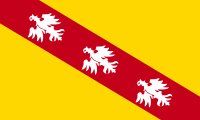
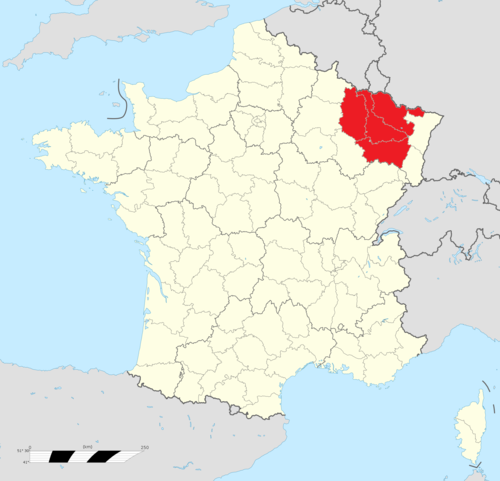
THE PA MELTING POT: Germany: German Sects: Part 4: Alsace-Lorraine: Part 1 of 2 :German or French? Lorraine


The PA Melting Pot: Germany:  German Sects 4 -German or French? Alsace-Lorraine 

PHOTOS AND INFO BELOW!!

Throughout the heavy immigration periods into the US we have no idea how many nationalities were written down incorrectly from exit ports to the ships’ manifests to the immigration landing records nor do we know how many names were spelled wrong or changed altogether. Europe was in constant flux for many centuries.  Example:  the now French provinces of Alsace-Lorraine in the north eastern part of France. Disputed for centuries by French kings, the princes of the Holy Roman Empire and embroiled in a bloody tug-of-war between France and Germany, France’s easternmost provinces share a tumultuous history. It’s no surprise then that almost everything, from the architecture to the cuisine and the language, is an enticing mixture of French and German – so much so that you might begin to wonder which country you’re actually in. 

Lorraine’s cuisine is affected by its bordering provinces:  on the west by the very   French Champagne area, on the south by Franche-Comte and on the east by very German-French Alsace.

Champagne: The French cuisine of Champagne  includes tartes (an open pastry case with a filling, savory or sweet) which the Lorraineans  embraced in their famous Quiche Lorraine, Pate Lorraine (chopped pork and veal with white wine & baked in puff pastry), Potee Lorraine (a stew of smoked meats and sausages, cabbage and root vegetables) and French charcuterie or German Fleischwaren (cured meats and Saucisson or Wursts or sausages shared by Lorraine, Champagne and Alsace). 

France-Compte: A meal in the Franche-Compte area could contain smoked mountain hams and saucisson (sausages) such as Jesu de Morteau and Bresi (thinly sliced cured beef), Saiucisse deMorteau, accompanied by "rösti" (wafers of potato) and by a salad of "cramaillots" (dandelions).  

Alsace: The German Alsacian influence on the cuisine of Lorraine could include a Flammenkuchen or tarte flambee which is bread dough rolled very thin in the shape of a rectangle and covered with fromage blanc or creme fraiche, sliced onions and lardons (bacon).  Fleishwaren or Charcuterie (meats), Schweinefleisch or Porc (pork), and Pates (famous Pate de Foie Gras from Strasbourg) are popular in Lorraine.  Other foods are sukrut or choucroute (sauerkraut), Wursts or Saucisson (sausages), spaetzle (noodles in both languages) and the heavier use of spices such as Kummel or Carvi grains (caraway seeds).

Historically, Lorraine was the site of the bloodiest battle of Verdun in World War I (1916) where thousands of French and Germans were slain.  Many Lorraineans fled the country for the US.  There are over 400,000 French Americans in PA and the state has 3.5 million people claiming German ancestry -- more than in Berlin. Allegheny County, which includes Pittsburgh, has 348,979 German-Americans, according to a census.  The question is could some of the Germans actually be Lorraineans or Alsatian (now French) depending upon who was in control of the provinces (the French or the Germans) at the time an immigrant came to the US?

This just further complicates tracing the Alsacian or  Lorrainean heritages.  The citizens of Alsace and Lorraine always claimed they were French even when Germany took over their cities and towns.  They were a very proud people and staunch about their French heritage.  So it is likely that some of the German population in western PA be Alsatian or Lorrainean from France?

Christine Willard, a native of western Pennsylvania, researches and blogs about the food unique to western Pennsylvania. She currently resides in North Carolina.   Her blog is www.ThePAMeltingPot.com.